Breaking the Template: Scaling to $100M Without Looking Like Every Other Brand
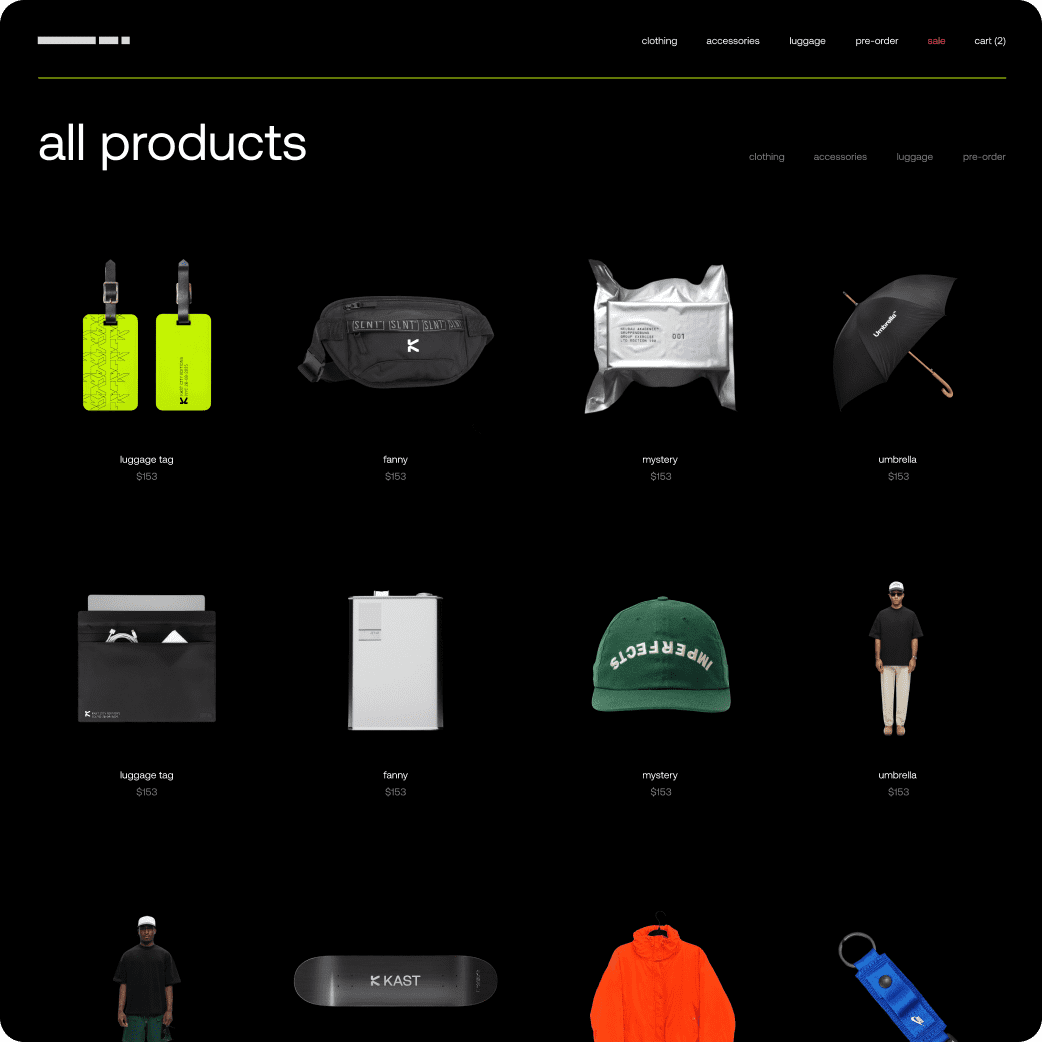
For high-growth D2C brands, the journey from $1M to $10M is often about survival and product-market fit. But as you cross the $50M threshold and eye the $100M milestone, the rules of the game change. On the path to enterprise scale, your biggest enemy isn't your competitor—it’s the "Sameness Ceiling."
Most enterprise brands scale on Shopify Plus using high-end themes or modular page builders. While efficient, these tools eventually create a digital plateau where every brand starts to look, feel, and convert like every other brand. To become a category leader, you must break the template and embrace an architecture that supports both unlimited creativity and enterprise-grade performance.
1. The "Sameness Ceiling": Why Templates Fail at Scale
At the $100M level, your brand is no longer just selling a product; it is selling an ethos. When you rely on the same Shopify Liquid templates as a thousand other stores, you are essentially renting your brand identity rather than owning it.
The Insight: Templated design creates a "generic" psychological response in the consumer. If your site looks like the last three D2C brands they visited, your product is perceived as a commodity. This leads to a higher reliance on aggressive (and expensive) ad spend to maintain growth, as the site itself fails to do the heavy lifting of brand differentiation.
The Solution: Headless Commerce (Shopify Hydrogen)
The most effective way to break the ceiling is to decouple your frontend from your backend. By using Shopify Hydrogen and Oxygen, we can build a completely bespoke frontend using React, while still leveraging Shopify’s world-class checkout and backend logic.
2. Speed as a Competitive Advantage
At enterprise scale, performance is a direct lever for revenue. For a brand doing $100M, a 1-second improvement in site speed can result in millions of dollars in found revenue. Traditional Shopify themes are often weighed down by "app bloat"—dozens of third-party plugins that inject heavy scripts into your header.
The Design Solution: The Lean Tech Stack
By moving to a custom build, we eliminate the need for bloated apps. We build features—like upsells, custom bundles, and loyalty modules—directly into the codebase.
- Instant Load Times: Custom builds allow for server-side rendering (SSR) and edge delivery, ensuring that your site feels instantaneous, even on slow mobile connections.
- Core Web Vitals: We prioritize the metrics that Google loves, ensuring your organic search authority grows alongside your paid efforts.
3. Cinematic E-Commerce: High-Fidelity Storytelling
To justify premium pricing and drive $100M+ in volume, your site must provide a "Cinematic" experience. This goes beyond static hero images and standard product grids.
The Design Solution: Immersive Visual Narrative
We leverage technologies like WebGL and GSAP to create fluid, scroll-triggered storytelling.
- Product Interaction: Imagine a user scrolling through a product page where the item deconstructs in 3D to show the quality of materials, or where the background transitions seamlessly to reflect the product's use-case.
- Emotional Resonance: By breaking out of the standard "square grid," we can guide the user’s eye through a curated narrative that builds desire before they ever reach the "Add to Cart" button.
4. Global Scale, Local Feel
Scaling to $100M almost always requires international expansion. Traditional templates struggle with the complexity of multi-currency, multi-language, and region-specific content without becoming a maintenance nightmare.
The Design Solution: Modular Design Systems
Instead of building pages, we build a Design System. This is a library of custom, reusable components that allow your internal marketing team to launch new regions or campaign pages in minutes, not days.
- Consistency at Scale: Whether a user is in Tokyo or New York, the brand experience remains high-fidelity.
- Agility: A custom design system allows you to pivot your messaging instantly across all global touchpoints without touching a line of code.
5. The ROI of "Category of One"
The brands that dominate their space—the ones that eventually exit for 10x multiples or go public—are those that established themselves as a "Category of One." They didn't just follow the D2C playbook; they rewrote it.
Breaking the template is a signal to your customers, your investors, and your competitors that you have arrived. It is the transition from being a "Shopify store" to being a Global Digital Powerhouse.
Conclusion: Don't Scale Into a Corner
If you are eyeing the $100M mark, the time to audit your technical debt is now. Don't let a $180 template be the bottleneck for a nine-figure vision. At Boundary, we specialize in taking Shopify Plus brands to the next level through custom, headless architecture and world-class creative direction.
Ready to break the "Sameness Ceiling"?
Audit your Enterprise Scale Strategy →